Best 7 Business Process Automation (BPA) Tools in South Africa


Key Summary:
- BPA is a vital strategy for South African firms to ensure POPIA/SARS compliance, mitigate load shedding disruptions, and overcome manual scaling limits.
- Fastest returns come from automating high-friction areas like finance reconciliations, HR onboarding, procurement, and customer support.
- Businesses use a blend of SA platforms (FlowCentric, Automate Enterprise) and global leaders (Nintex, UiPath) to manage low-code and robotic tasks.
- Effective automation relies on choosing tools based on process flow and system integration rather than popularity or quick fixes.
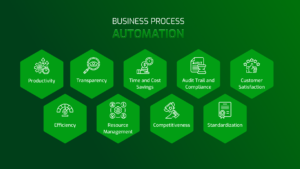
Business Process Automation (BPA) is no longer just a cost-cutting exercise for large enterprises. For South African businesses, automation has become a practical way to improve efficiency, maintain compliance, and stay resilient in a challenging operating environment.
This guide breaks down seven practical BPA tools commonly used by South African businesses, each mapped to a specific business process. Instead of ranking tools or pushing platforms, the goal is to help you answer one critical question:
“What process should I automate first and which tool actually fits that need?”
Why Business Process Automation Matters for South African Businesses
South African companies face a unique mix of pressures:
- Rising labour and operational costs
- Load shedding and infrastructure disruptions
- Skills shortages across finance, IT, and operations
- Manual, email-driven workflows that don’t scale
- Compliance requirements such as POPIA, SARS, and industry audits
Business Process Automation helps organisations reduce dependency on manual effort, improve process consistency, and build operational resilience—without needing to hire more staff or invest in complex enterprise systems.
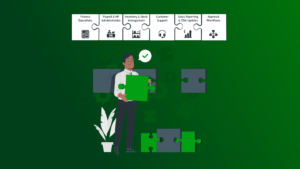
Common Business Processes South African Companies Automate
When businesses explore automation, they often ask where to start. The processes below are the most commonly automated first, because they deliver clear ROI and reduce day-to-day friction.
Finance & Accounting
Finance is often the first area South African businesses automate because it directly affects cash flow and reporting accuracy. Manual invoicing, reconciliations, and expense tracking slow down payments and increase errors, especially when spreadsheets are heavily relied on. Automating invoicing, payment reminders, bank reconciliation, and financial reporting improves cash flow visibility and delivers fast, measurable ROI.
HR & Payroll Workflows
As organisations grow, HR administration quickly becomes time-consuming and inconsistent. Automating leave requests, onboarding workflows, and HR document management reduces approval delays, payroll errors, and compliance risks. HR automation is especially valuable when management time is consumed by admin tasks and employee records are difficult to maintain accurately.
Operations & Internal Approvals
Operations teams often depend on emails and spreadsheets to manage internal requests, which leads to delays and poor visibility. Automating internal service requests, purchase approvals, and workflow tracking speeds up decision-making and improves accountability. This is typically prioritised when approvals take too long and managers are overwhelmed with manual follow-ups.
Customer Support & CRM
Customer-facing processes have a direct impact on revenue, retention, and brand trust. Automating lead capture, ticket routing, follow-ups, and SLA tracking ensures no opportunities or customer issues are missed. Businesses prioritise this when leads are poorly tracked, support queries are scattered across channels, or customers experience slow response times.
Procurement & Vendor Management
Manual procurement processes often result in overspending, unclear approvals, and operational delays. Automating purchase requests, vendor onboarding, and spend tracking creates better financial control and faster procurement cycles. This becomes essential when there is limited visibility into spend and frequent delays affect day-to-day operations.
Compliance & Reporting
Compliance requirements continue to grow, making manual tracking risky and inefficient. Automating compliance checks, audit trails, and reporting workflows reduces regulatory risk and improves audit readiness. Businesses usually prioritise this when audit preparation is time-consuming and compliance management relies heavily on manual processes.
Talk to a Business Process Automation Expert
Implement Business Process Automation that delivers faster turnaround, lower costs, and predictable returns.
Types of Business Process Automation Tools Available in South Africa
Once a business identifies what to automate, the next step is choosing the right type of tool.
No-Code / Low-Code Automation Platforms
No-code and low-code platforms let businesses build custom workflows with minimal coding. They are best suited for unique or evolving processes where flexibility matters more than speed. These tools deploy quickly and reduce development costs, but can become complex to manage as automation scales.
Workflow Automation Tools
Workflow automation tools focus on approvals, routing, and structured processes. They work best for approval-heavy workflows like HR, procurement, and operations. These tools are easy to adopt and use, but offer limited flexibility beyond predefined workflows.
Robotic Process Automation (RPA) Tools
RPA tools automate tasks by replicating human actions across systems, making them ideal for legacy software without APIs. They are effective for high-volume, rule-based tasks, but typically require higher setup effort and ongoing maintenance.
CRM-Based Automation Tools
CRM-based automation is built into customer relationship platforms and is best for sales, marketing, and support workflows. It centralises customer data and improves visibility, but is usually limited to customer-facing processes.
Industry-Specific Automation Tools
Industry-specific tools are designed for sectors with strict regulatory or operational requirements. They offer built-in compliance and faster implementation, but often limit customisation and increase vendor lock-in risk.
BPA Tools vs Business Software:
Not all business software is Business Process Automation (BPA). A tool only qualifies as BPA when it automates a repeatable workflow end-to-end, rather than just storing or managing data.
| Criteria | BPA Tools | Business Software |
|---|---|---|
| Primary purpose | Automate end-to-end processes | Store and manage data |
| Workflow automation | Built-in workflows, rules, triggers | Often manual or optional |
| Human intervention | Minimal once configured | Required at each step |
| Cross-step automation | Yes (tasks, approvals, handoffs) | No or limited |
| ROI focus | Efficiency, speed, error reduction | Record-keeping and visibility |
| Examples | Xero (invoicing automation), Sage HR (leave workflows), FlowCentric (approvals) | Basic CRM, accounting ledgers, HR databases |
Simple Rule of Thumb
- If the tool moves work automatically from one step to the next, it’s BPA.
- If it only records information and waits for human action, it’s business software.
Best 7 Business Process Automation Tools Used in South Africa
These tools are not ranked. Each is highlighted for a specific business function, which is how automation delivers the highest ROI.
1. FlowCentric Processware
FlowCentric Processware is a South African–developed platform that automates operations workflows, approvals, compliance processes, and document-driven business processes across departments. It operates as a business process management and workflow automation platform, replacing manual, email-based work with structured digital flows that enforce rules, sequencing, and auditability from start to finish.
Key features
- End-to-end workflow automation
- Approval routing and document workflows
- Audit trails and compliance controls
- Process monitoring and reporting
Limitations
- Requires upfront process design
- Less suited for lightweight, ad-hoc automation
Best for
Organisations needing governed, auditable process automation
2. Automate Enterprise
Automate Enterprise is a South African platform used to automate customer onboarding, service requests, case management, and internal operational workflows. It functions as a workflow automation and BPM solution that coordinates people, systems, and data into structured processes that improve turnaround time, visibility, and accountability.
Key features
- Visual workflow and form design
- Case and request routing
- Integration with back-office systems
- Process tracking and reporting
Limitations
- Limited system-level task automation
- Strong outcomes depend on clear process definition
Best for
Service-driven organisations with high workflow volumes
3. Nintex
Nintex is widely used by South African enterprises to automate HR workflows, procurement approvals, operational processes, and compliance workflows, particularly in Microsoft environments. It enables low-code design of cross-department workflows, allowing organisations to standardise approvals, routing, and process visibility at scale.
Key features
- Low-code workflow design
- Microsoft 365 and SharePoint integration
- Approval routing and analytics
Limitations
- Licensing costs increase as usage grows
- Best suited to Microsoft-centric technology stacks
Best for
Large organisations standardising internal workflows
4. Kissflow
Kissflow is used to automate approval-heavy business processes such as procurement requests, HR approvals, finance sign-offs, and internal service requests. It focuses on replacing email-driven approvals with simple, structured workflows that are quick to deploy and easy for teams to adopt.
Key features
- Rapid workflow configuration
- Approval routing and real-time visibility
- Role-based access controls
Limitations
- Limited support for complex business logic
- Not designed for heavily regulated environments
Best for
SMEs and mid-sized organisations needing fast approval automation
5. Pipefy
Pipefy automates operational requests, service delivery processes, onboarding workflows, and internal task management by replacing unstructured email and spreadsheet-based work with rule-driven pipelines. It provides teams with transparency, ownership, and measurable process performance.
Key features
- Rule-based workflow automation
- SLA tracking and process visibility
- Integrations with common SaaS tools
Limitations
- Limited enterprise-grade governance
- Less suitable for compliance-intensive processes
Best for
Fast-moving teams managing high volumes of internal requests
6. UiPath
UiPath is widely deployed in South Africa to automate high-volume, rule-based business tasks such as data entry, reconciliations, report generation, and system-to-system actions. It uses robotic process automation to replicate human interactions across applications, removing repetitive manual work at scale.
Key features
- Automation across legacy and modern systems
- No API dependency
- Centralised monitoring and analytics
Limitations
- Requires ongoing maintenance as systems change
- Focused on task execution rather than end-to-end orchestration
Best for
Enterprises automating repetitive system interactions
7. Microsoft Power Automate
Microsoft Power Automate is commonly used to automate approvals, notifications, data synchronisation, and cross-system operational workflows across Microsoft and third-party applications. It acts as an automation layer that connects systems and users into cohesive, rule-driven processes.
Key features
- Workflow automation and approvals
- Extensive connector ecosystem
- Native Microsoft 365 integration
Limitations
- Complex workflows require careful design
- Advanced scenarios may need premium licences
Best for
Organisations standardised on Microsoft tools
Important Accuracy Note
The tools listed above include South African-developed platforms and global solutions that are widely used by local businesses, ensuring alignment with South African regulatory and operational requirements.
How to Choose the Right BPA Tool for Your Business
- Start with repetitive, high-impact processes where manual work causes delays, errors, or risk.
- Prioritise process fit over tool popularity—the best tool is the one that matches how work actually flows.
- Assess internal skills and change readiness to ensure teams can adopt and use the tool effectively.
- Ensure integration with existing systems such as ERP, HR, finance, and CRM platforms.
- Evaluate POPIA compliance and data security, especially for customer, employee, and financial data.
- Plan for scalability, choosing a tool that can grow with process complexity and business needs.
- Align automation initiatives with clear business goals, not isolated technical improvements.
Common BPA Mistakes South African Businesses Make
- Automating inefficient or broken processes without redesigning them first.
- Purchasing tools without a clear automation roadmap or prioritised use cases.
- Over-customising too early, creating unnecessary complexity and maintenance burden.
- Ignoring user training and change management, leading to poor adoption.
- Expecting instant ROI, rather than allowing time for iteration and optimisation.
Final Thoughts
Business Process Automation is not about replacing people; it’s about removing friction from everyday work so teams can focus on higher-value outcomes. For South African businesses, applying the right BPA tool to the right process can significantly improve efficiency, strengthen compliance, and create more consistent, scalable operations across departments.
With the right business process automation consulting approach, organisations can avoid common automation pitfalls and achieve measurable results faster. At New Phase Solutions, BPA is implemented with a strong focus on process clarity, POPIA compliance, system integration, and long-term scalability, ensuring automation becomes a strategic growth enabler, not just a technology upgrade.